
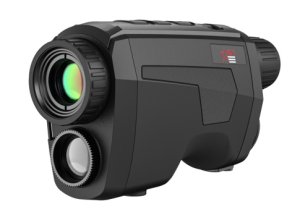
A thermal monocular is the most versatile thermal imaging tool available for hunters and outdoors professionals. Unlike a thermal rifle scope, a monocular is a handheld device used for scouting, animal detection, navigation, and situational awareness before a rifle is ever shouldered.
The best ones work as standalone devices and can often be paired with a clip-on adapter for use on a rifle scope.
Under $2,000, the thermal monocular market has shifted in the past three years. 384×288 sensors that cost $3,000 in 2019 are now available under $1,000, and the $1,500 to $2,000 tier delivers 640×480 sensors with detection ranges that professional guides and serious hunters once had to pay $5,000 to access.
The primary specification to evaluate is sensor resolution. A 384×288 sensor detects animals but provides limited identification detail at distance. A 640×480 sensor provides better image quality and identification capability.
At the $2,000 ceiling, both are available, the right choice depends on whether detection range or image quality is the priority.
Best Thermal Monoculars Under $2000 Comparison
| # | Image | Name | Key Features | Check Price |
|---|---|---|---|---|
| 1 | 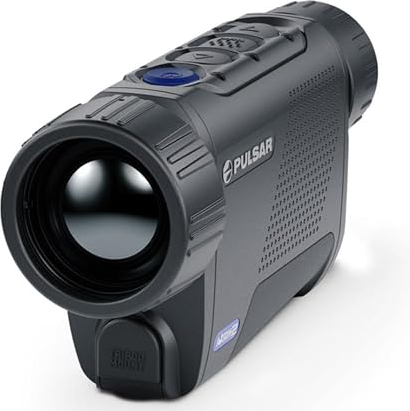 |
Pulsar Axion 2 XG35 | 640×480, 35mm, 1,800m detection, Stream Vision | Check Price |
| 2 | 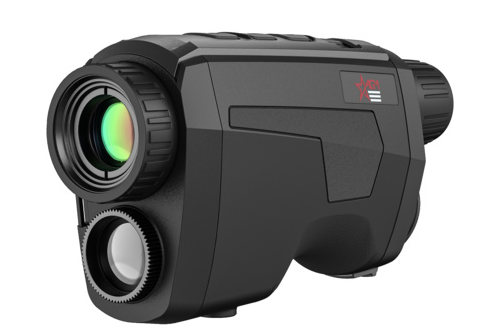 |
AGM Fuzion TM35-384 | 384×288, fusion optical/thermal, 35mm | Check Price |
| 3 | 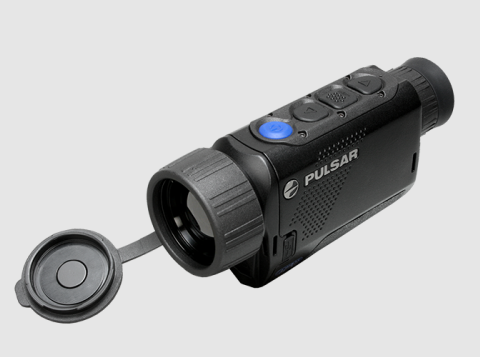 |
Pulsar Axion XM38 | 320×240, ultra-compact, 38mm, 1,300m | Check Price |
| 4 | 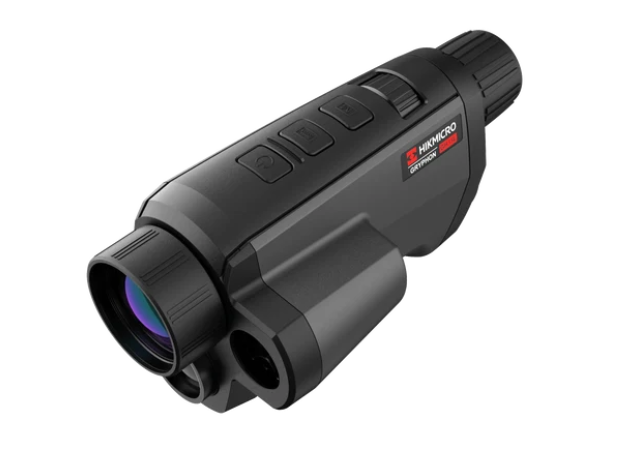 |
HIKMICRO Gryphon Pro GH35L | 640×480, laser rangefinder integrated, 35mm | Check Price |
| 5 | 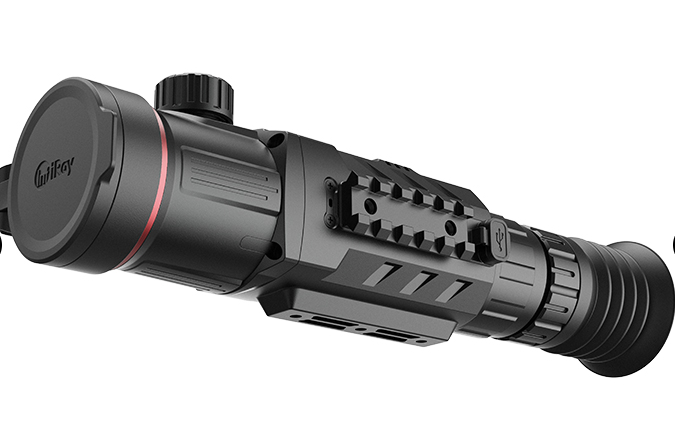 |
InfiRay Outdoor RICO M | 640×480, 25mm, monocular-to-scope clip-on | Check Price |
#1 Pulsar Axion 2 XG35 – Best Overall
The Pulsar Axion 2 XG35 is the best overall thermal monocular under $2,000 because it delivers a 640×480 sensor with a 35mm lens and a 1,800-meter detection range in a compact handheld package backed by Pulsar’s industrial-grade build quality and Stream Vision 2 app integration.
The 640×480 sensor provides identification-quality detail at distances where 384×288 sensors can confirm that an animal is present.
For a hunter scouting a field before dawn, the difference between seeing a deer-shaped heat signature and identifying the size, direction, and number of animals is the difference the 640 sensor provides.
Stream Vision 2 connects via WiFi for real-time display on a phone or tablet, allowing two hunters to scout together without crowding over one device.
Key Features
| Feature | Specification |
|---|---|
| Sensor | 640×480, 12 micron |
| Lens | 35mm |
| Detection Range | 1,800 meters |
| Magnification | 4x (digital to 16x) |
| Battery | 4.5 hours |
| Features | WiFi, Stream Vision 2, video |
Pros
- 640×480 sensor delivers identification-quality detail at 600+ meters
- 1,800m detection range covers any practical scouting or hunting distance
- Stream Vision 2 for real-time phone display and recording
- Pulsar’s build quality handles field conditions
Cons
- Battery life of 4.5 hours requires field recharging on extended hunts
- Highest price on this list, approaching the $2,000 ceiling
- 4x optical magnification with digital zoom
Our Take
The Pulsar Axion 2 XG35 is the right thermal monocular for a serious hunter who wants 640 sensor quality and 1,800-meter detection range in a Pulsar-reliable package under $2,000.
#2 AGM Fuzion TM35-384 – Best Value
The AGM Fuzion TM35-384 is unique on this list for its fusion design: it combines a 384×288 thermal sensor with a visible-light camera and displays a blended image that overlays thermal heat signatures on a photographic-quality background.
This fusion mode provides better target identification context than pure thermal when some ambient light is available.
At well under $2,000, the Fuzion delivers capability that competing manufacturers charge $3,000+ for.
The 35mm lens covers standard scouting and hunting distances. Detection range on a deer-sized target exceeds 800 meters.
Key Features
| Feature | Specification |
|---|---|
| Sensors | 384×288 thermal + 1080p visible |
| Lens | 35mm |
| Detection Range | 800+ meters |
| Mode | Thermal, visible, fusion |
| Battery | 5 hours |
Pros
- Fusion mode overlays thermal on photographic background for better identification
- Best value for fusion thermal/visible capability under $2,000
- 5-hour battery handles full scouting sessions
- Competitive price for the fusion feature set
Cons
- 384×288 thermal sensor below 640×480 quality in pure thermal mode
- Fusion mode requires some ambient light for the visible camera component
- Not the right choice for complete darkness detection where pure thermal dominates
Our Take
The AGM Fuzion TM35-384 is the right monocular for a hunter who wants the identification advantage of fusion imaging at a price well below the Pulsar 640 tier.
#3 Pulsar Axion XM38 – Best Compact
The Pulsar Axion XM38 is the smallest and lightest Pulsar thermal monocular, sized to fit in a jacket pocket while delivering 320×240 sensor performance and a 1,300-meter detection range on a 38mm lens.
For a hunter who wants thermal scouting capability without adding visible bulk to their field kit, the XM38 is the answer.
The compact format sacrifices sensor resolution compared to the Axion 2 XG35 but retains Pulsar’s Stream Vision app connectivity and build quality at a lower price.
Key Features
| Feature | Specification |
|---|---|
| Sensor | 320×240 |
| Lens | 38mm |
| Detection Range | 1,300 meters |
| Size | Pocket-sized |
| Features | Stream Vision, video |
Pros
- Pocket-sized for comfortable all-day field carry
- 1,300m detection range adequate for most hunting scouting
- Pulsar build quality and Stream Vision app
- Lower price than the Axion 2 XG35
Cons
- 320×240 sensor below the 384 and 640 options for identification detail
- Shorter battery life than larger units
- 1,300m detection range below the Axion 2 XG35’s 1,800m
Our Take
The Pulsar Axion XM38 is the right thermal monocular for a hunter who prioritizes compact pocket carry over maximum sensor resolution and detection range.
#4 HIKMICRO Gryphon Pro GH35L – Best for Hunting
The HIKMICRO Gryphon Pro GH35L is the thermal monocular on this list with an integrated laser rangefinder, a feature that is useful for hunters who need to confirm target distance for ballistic calculations before the shot.
The 640×480 sensor with a 35mm lens provides excellent image quality. The integrated rangefinder measures distance to 1,000 meters and overlays the reading on the display.
For a hunter using a thermal monocular to find and range game before mounting the rifle, this eliminates the need for a separate rangefinder device.
Key Features
| Feature | Specification |
|---|---|
| Sensor | 640×480 |
| Lens | 35mm |
| Rangefinder | Integrated, 1,000 meters |
| Detection Range | 1,800 meters |
| Battery | 4 hours |
Pros
- Integrated laser rangefinder eliminates need for separate ranging device
- 640×480 sensor for identification-quality thermal imaging
- 1,800m detection range
- Best hunting utility combination of any monocular on this list
Cons
- Battery life of 4 hours is the shortest on this list
- Higher price than the AGM Fuzion despite no fusion feature
- HIKMICRO warranty and support less established than Pulsar in the US market
Our Take
The HIKMICRO Gryphon Pro GH35L is the right thermal monocular for a hunter who wants 640 sensor quality with an integrated rangefinder for a single-device scouting and ranging solution.
#5 InfiRay Outdoor RICO M – Best Detection Range
The InfiRay Outdoor RICO M is the clip-on capable thermal monocular that doubles as a rifle scope attachment.
The 640×480 sensor and 25mm lens are optimized for the clip-on mounting position in front of a day scope, converting a standard optical scope to thermal use without a dedicated thermal scope.
As a handheld monocular it delivers 640×480 quality at a shorter detection range than 35mm alternatives.
The dual-use clip-on capability is the defining value for hunters who want one device for both scouting and rifle use.
Key Features
| Feature | Specification |
|---|---|
| Sensor | 640×480 |
| Lens | 25mm |
| Detection Range | 1,000 meters |
| Features | Clip-on compatible, video |
Pros
- Dual use as handheld monocular and rifle scope clip-on
- 640×480 sensor quality
- Eliminates the need for a separate thermal rifle scope
- One device covers both scouting and shooting applications
Cons
- 25mm lens limits detection range compared to 35mm alternatives
- Clip-on use requires compatible day scope with appropriate eye relief
- Not the right choice for maximum detection range as a standalone monocular
Our Take
The InfiRay RICO M is the right thermal monocular for a hunter who wants a single device that covers both handheld scouting and clip-on rifle scope use.
Did You Know? Thermal imaging technology was originally developed for military applications in the 1960s under the name Forward Looking Infrared (FLIR). The first commercial thermal monoculars for civilian hunting were introduced in the early 2000s at prices exceeding $10,000. The dramatic cost reduction from $10,000 to under $2,000 for 640-resolution units over 20 years is driven by the same CMOS sensor manufacturing advances that reduced the cost of smartphone cameras. Chinese manufacturers including HIKMICRO, InfiRay, and AGM have further accelerated cost reduction by manufacturing sensors in-house rather than purchasing them from the handful of American and European suppliers who controlled supply.
Frequently Asked Questions: Best Thermal Monoculars Under $2000
What is the difference between 384 and 640 thermal sensors in a monocular?
A 640×480 sensor has almost three times the pixel count of a 384×288 sensor. The practical result is a sharper, more detailed thermal image that allows target identification at greater distances. Under $2,000, both are available, 640 sensors deliver better image quality for the additional cost.
How long do thermal monocular batteries last?
Most thermal monoculars at this price range deliver 4 to 6 hours of continuous use. Extended hunts require field recharging via USB-C or a spare battery module.
Can a thermal monocular be used as a rifle scope?
Not directly. Thermal monoculars are handheld devices that require head movement to aim. The InfiRay RICO M is the exception, designed for clip-on use in front of a day scope. Dedicated thermal rifle scopes are the correct tool for shooting applications.
What is the best thermal monocular for deer hunting under $2000?
The HIKMICRO Gryphon Pro GH35L with integrated rangefinder is the best hunting-specific choice. The Pulsar Axion 2 XG35 provides the best pure image quality for pre-dawn scouting.
Is a 384 sensor adequate for hunting at 200 yards?
Yes. A 384×288 thermal sensor detects and identifies deer-sized animals at 200 yards in complete darkness. The 640×480 sensor advantage is most significant at longer scouting distances beyond 300 meters. —
Verdict
Under $2,000, the thermal monocular market delivers genuine professional capability that professional guides paid $5,000 for five years ago.
For the best overall combination of 640 sensor quality, detection range, and Pulsar reliability, the Axion 2 XG35 is the right answer.
For the unique fusion thermal/visible imaging advantage at a lower price, the AGM Fuzion TM35-384 is the innovative choice.
The Pulsar Axion XM38 is the compact answer for pocket-sized scouting capability without bulk.
For the best hunting utility with an integrated rangefinder, the HIKMICRO Gryphon Pro GH35L is the purpose-built choice.
And for a dual-use monocular and rifle scope clip-on in one device, the InfiRay RICO M is the versatile answer.

Richard Brown is a long-range shooting enthusiast and competitive shooter with extensive experience in scopes across multiple disciplines. He hunts regularly across the Midwest and has built his expertise through years of hands-on testing in both competitive shooting and hunting. Richard also instructs youth rifle shooting, which has given him perspective on scopes at every price point and skill level. He combines technical knowledge with practical field experience to provide honest reviews – contact me