

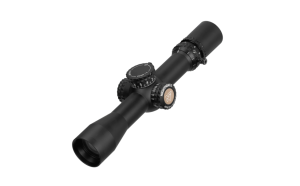
The Tikka T3x is one rifle you should not underestimate at the counter. Sub-MOA accuracy out of the box, across most chamberings, is not a fluke.
Finnish manufacturing tolerances, a free-floated barrel, and a trigger breaking between 2 and 3 pounds produce a rifle that will outshoot most scopes mounted on it. When the rifle is this accurate, the scope becomes the performance ceiling.
A mediocre glass on a Tikka T3x is like running economy tires on a performance sedan. The T3x is chambered in everything from .223 Rem to .338 Win Mag.
It sells to everyone from whitetail hunters in hill country timber to long-range precision shooters pushing 600 yards across open plains. Those two users do not need the same optic. What they share is a rifle that will hold up its end of the deal.
The T3x uses a standard Picatinny rail and takes 30mm or 1 inch rings without drama. There is no adapter headache here. The platform is honest and easy to set up.
These five picks cover the full range of how the T3x gets used: best overall, best for hunting, best budget, best premium, and best glass quality in the mid-range segment. Every one of them can keep up with what the T3x is capable of.
Best Scopes for Tikka T3x Comparison
| # | Image | Name | Key Features | Check Price |
|---|---|---|---|---|
| 1 | 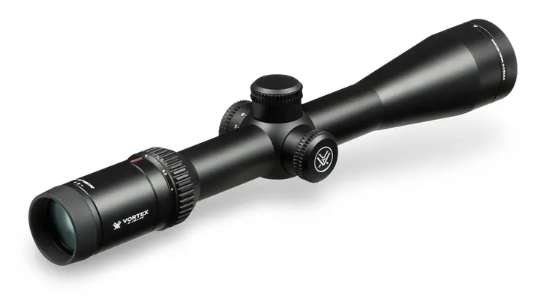 |
Vortex Viper HS 4-16×44 | Second focal plane, Dead-Hold BDC, XD extra-low dispersion glass | Check Price |
| 2 | 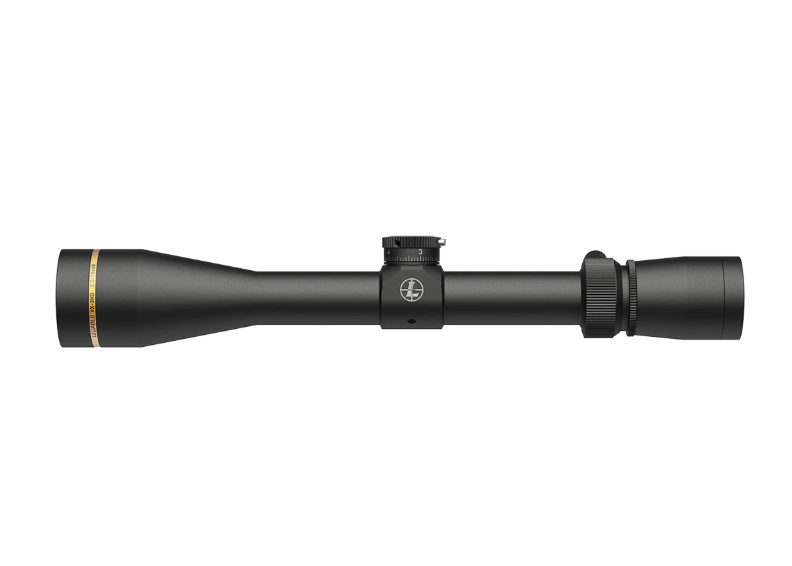 |
Leupold VX-3HD 3.5-10×40 | Twilight Max HD light management, Tri-MOA dot reticle, compact profile | Check Price |
| 3 | 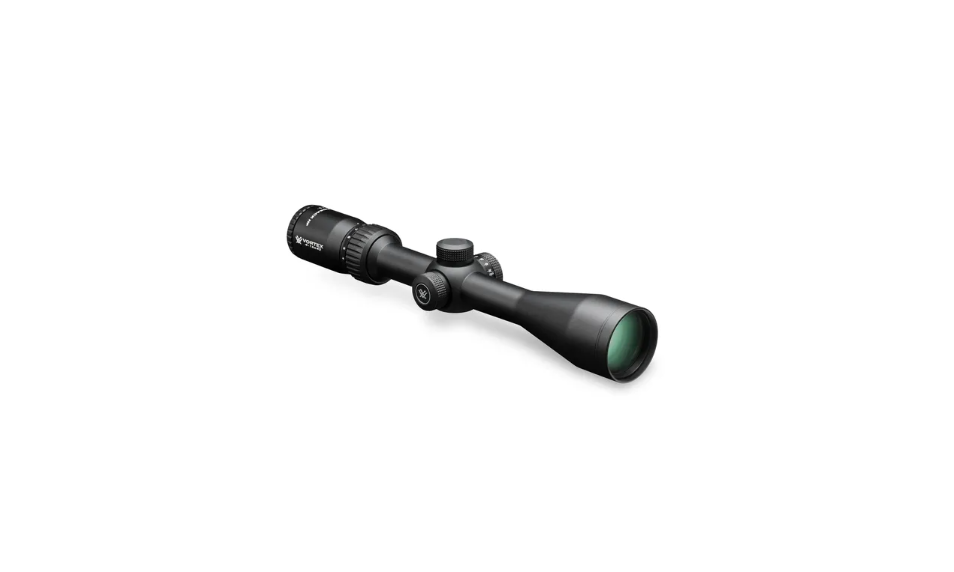 |
Vortex Diamondback HP 4-16×42 | 4x zoom ratio, Dead-Hold BDC reticle, fully multi-coated glass | Check Price |
| 4 | 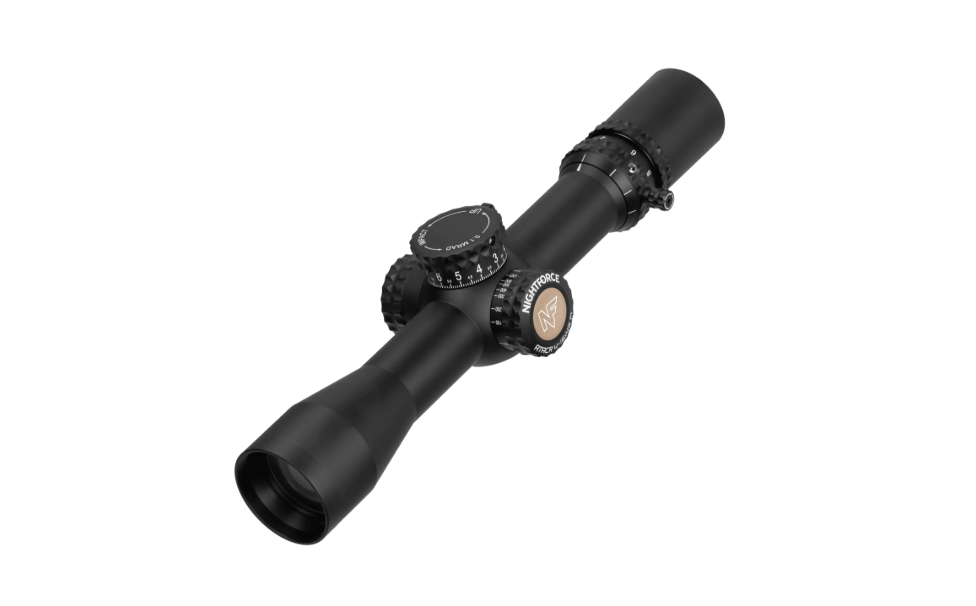 |
Nightforce ATACR 4-16×42 F1 | First focal plane, Mil-R reticle, MOAR reticle option, aircraft aluminum | Check Price |
| 5 | 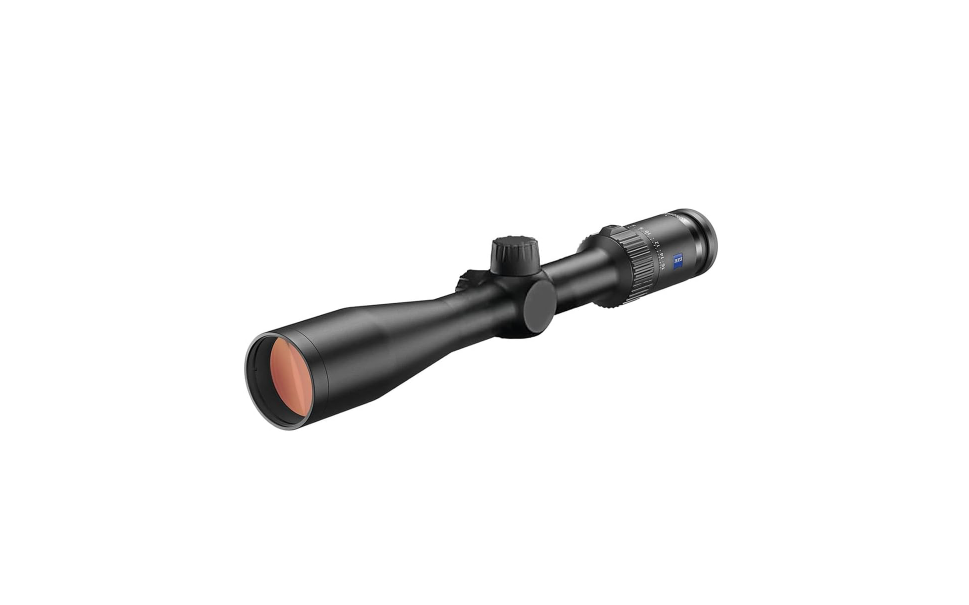 |
Zeiss Conquest V4 3-12×44 | T* anti-reflective coating, illuminated reticle option, 30mm tube | Check Price |
#1 Vortex Viper HS 4-16×44 – Best Overall
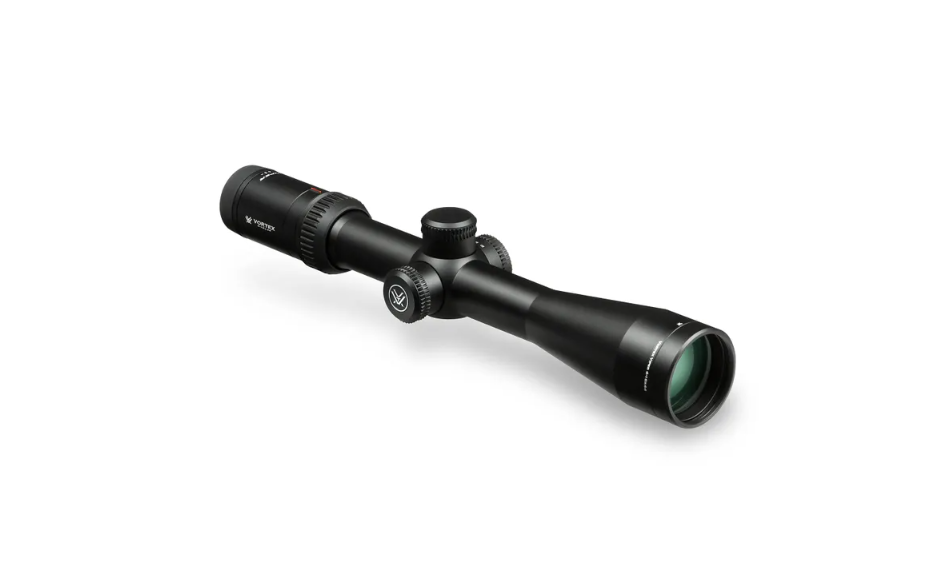
The Viper HS sits in the sweet spot of the Vortex lineup, right above the Diamondback HP and below the Viper PST Gen II.
That position is not accidental. It is where Vortex concentrated the features that matter most to a general-purpose rifle user: excellent glass, a practical reticle, and a versatile zoom range.
The 4-16x magnification range fits the T3x extremely well. At 4x, you have a wide field of view for fast target acquisition.
At 16x, a T3x chambered in 6.5 Creedmoor or .308 Win can work at 600 yards without squinting through a keyhole.
The XD extra-low dispersion glass earns the most genuine praise in long-range shooting forums. Color fringing at the image edges, which gets obvious in cheaper glass at high magnification, is well controlled here. Dawn and dusk performance is better than the Diamondback tier.
The Dead-Hold BDC reticle is a genuine field tool, not a marketing feature.
Calibrated for typical centerfire trajectories, the holdover points are useful at real hunting distances when matched to .308 Win or 6.5 CM. You are not guessing but working with a system that was thought through.
The Viper HS uses a 30mm main tube, which gives the turrets more mechanical travel than a 1-inch tube scope can provide. On a T3x set up for extended range work, that extra adjustment latitude is what you want.
This scope is backed by Vortex’s VIP warranty: unconditional, lifetime, and transferable to the next owner. That warranty is part of the value calculation, especially when pairing a quality optic with a rifle you intend to keep for decades.
Key Features
| Feature | Specification |
|---|---|
| Magnification | 4-16x |
| Objective Lens | 44mm |
| Tube Diameter | 30mm |
| Reticle | Dead-Hold BDC (SFP) |
| Eye Relief | 4 inches |
| Weight | 16.7 oz |
| Warranty | Vortex VIP Lifetime |
Pros
- XD glass delivers better edge clarity and low light performance than the price suggests
- 4-16x zoom range covers everything from 50 yard timber shots to 600 yard open country work
- Dead-Hold BDC reticle is calibrated, not just decorative
- VIP warranty covers the scope for life, transferable to the next owner
Cons
- Second focal plane means BDC holdovers are only accurate at maximum magnification
- Turrets are capped, which some precision shooters find limiting compared to exposed tactical knobs
- At 16.7 oz it is on the heavier side for a mountain hunting build
Our Take
If you are building one versatile rifle on the Tikka T3x platform and want a single scope that handles hunting, moderate long range, and everything in between, the Vortex Viper HS 4-16×44 earns top billing.
It delivers glass quality that matches the rifle’s mechanical capability and backs it all up with a warranty.
#2 Leupold VX-3HD 3.5-10×40 – Best for Hunting
Leupold has been making rifle scopes in the United States since 1947.
The VX-3HD is not the most expensive scope they produce, but it might be the most thought-through for the specific task of hunting. Leupold built it around what matters when an animal steps out at first light or last light.
The Twilight Max HD light management system is the detail that separates this scope from competitors at the same price.
Leupold engineers the lens coatings to maximize transmission in the low angle, high contrast conditions that define the first and last 30 minutes of shooting light. Independent optics reviews place the VX-3HD above its price class in these conditions.
The 3.5-10x magnification range is right for the way most hunters use a T3x. The lower end is low enough for close-range shots in timber. The upper end handles field shots at 400 yards when the T3x is doing its job.
If you are not a dedicated long-range target shooter, you will miss having more than 10x in the field. The compact 40mm objective keeps the profile slim and mount height manageable.
On a hunting rifle you carry all day, that matters more than it sounds. The VX-3HD comes in at around 12 oz, a meaningful difference when your legs are feeling the elevation at mile 8 of a mountain hunt.
The Tri-MOA dot reticle is simple, fast, and works well in low light. There is no clutter. The dot covers about 3 inches at 100 yards, fast enough for close range and precise enough for extended shots when you know your trajectory.
The VX-3HD is covered by Leupold’s lifetime warranty.
Key Features
| Feature | Specification |
|---|---|
| Magnification | 3.5-10x |
| Objective Lens | 40mm |
| Tube Diameter | 1 inch |
| Reticle | Tri-MOA Dot (SFP) |
| Eye Relief | 4.6 inches |
| Weight | 12 oz |
| Warranty | Leupold Lifetime |
Pros
- Twilight Max HD glass is excellent at dawn and dusk hunting conditions
- Compact, light profile makes it comfortable on a carry rifle for long days
- Simple Tri-MOA reticle is fast and uncluttered
- Lifetime warranty from a manufacturer with a 75-year track record in the US market
Cons
- 10x top end is limiting for serious long range precision work past 500 yards
- 1-inch tube provides less elevation adjustment range than a 30mm tube option
- No illuminated reticle on the standard model
Our Take
The Leupold VX-3HD 3.5-10×40 is the right answer for the hunter who wants to use the T3x the way it was designed to be used: carried into the field, trusted in real conditions, and ready when it matters.
The glass quality and low light performance are what make it earn its position here over cheaper options with bigger numbers on the box.
#3 Vortex Diamondback HP 4-16×42 – Best Budget Pick
The Diamondback HP is where Vortex proved that serious glass does not require a serious price tag. HP stands for high performance, and the name holds up better than most marketing claims do in the optics world.
At 4-16×42, the Diamondback HP offers the same zoom range as the Viper HS at a lower street price.
The glass is fully multi-coated and performs in mid-range light conditions. It is not Viper HS glass. But most shooters comparing the two in daylight will find the difference narrower than the price gap suggests.
The combination of zoom range, reticle, and price is where the Diamondback HP earns its place on this list.
The Dead-Hold BDC reticle is the same system found in higher-tier Vortex scopes. For a T3x owner on a reasonable budget who wants to shoot at 300 to 400 yards, this is the honest path forward.
The turrets are capped and reset well. Build quality is solid for the price. Vortex has tightened manufacturing tolerances in recent production runs, and zero-hold complaints from earlier generations are resolved in current stock.
One thing worth knowing: the 42mm objective is smaller than the 44mm on the Viper HS. In daylight, this makes almost no difference. At the margins of shooting light, it starts to show, though hunters in heavy timber where light fades early will likely never notice.
This scope is backed by Vortex’s VIP warranty: unconditional, lifetime, and transferable to the next owner.
Key Features
| Feature | Specification |
|---|---|
| Magnification | 4-16x |
| Objective Lens | 42mm |
| Tube Diameter | 1 inch |
| Reticle | Dead-Hold BDC (SFP) |
| Eye Relief | 3.8 inches |
| Weight | 15.7 oz |
| Warranty | Vortex VIP Lifetime |
Pros
- Strong value for a 4-16x scope with a practical BDC reticle
- Fully multi-coated glass performs well in standard daylight conditions
- VIP lifetime warranty covers the scope regardless of price paid
- Same BDC reticle system as higher-tier Vortex scopes
Cons
- Glass quality steps down compared to the Viper HS, especially in low light
- 1-inch tube limits total elevation adjustment range for longer-range setups
- Shorter eye relief at 3.8 inches requires more consistent head position
Our Take
If you are putting a quality scope on a Tikka T3x without wanting to spend Viper HS money today, the Diamondback HP is the honest choice. It will not hold back a T3x at practical hunting and shooting distances, and the VIP warranty means you are covered for life regardless of what happens to it.
#4 Nightforce ATACR 4-16×42 F1 – Best Premium
The Nightforce ATACR is not a scope you buy because you want something nice.
It is a scope you buy because you want to remove every variable from the precision equation. On a Tikka T3x in 6.5 Creedmoor or .308 Win set up for serious long-range work, this combination produces results most factory rifles cannot reach.
The first focal plane reticle is the central reason the ATACR earns its premium position.
On an SFP scope, reticle subtensions are only accurate at one magnification. On the ATACR’s FFP design, the Mil-R or MOAR reticle scales with the image at every power setting. At 6x, 10x, or 16x, holdover markings are accurate without mental math.
Nightforce builds the ATACR to MIL-SPEC standards, and the construction shows immediately in handling.
The turrets are zero-stop capped, return to zero with authority, and deliver an audible click that is hard to miscount. The main tube is machined from aircraft-grade aluminum to tolerances most manufacturers do not attempt.
The optical quality sits in a different category from everything else on this list.
Edge-to-edge clarity at 16x, minimal color fringing, and low light transmission that stays useful well into shooting-light margins. Nightforce glass comes up in casual reviews because casual reviewers less often test at the distances where the difference becomes obvious.
The ATACR comes in above 30 oz, which is heavy by hunting standards. It is not a mountain hunting optic unless weight is irrelevant to your build. It is a precision platform for shooters who prioritize performance over ounces.
Key Features
| Feature | Specification |
|---|---|
| Magnification | 4-16x |
| Objective Lens | 42mm |
| Tube Diameter | 34mm |
| Reticle | Mil-R or MOAR (FFP) |
| Eye Relief | 3.94 inches |
| Weight | 30.9 oz |
| Warranty | Nightforce Limited Lifetime |
Pros
- First focal plane reticle is accurate at every magnification setting, not just max power
- Zero stop turrets return to zero under sustained field use
- Optical quality is class-leading for a 4-16x format
- 34mm tube provides the most total adjustment range of any scope on this list
Cons
- Price is a serious commitment, only justified for shooters who will use the full capability
- 30.9 oz adds meaningful weight to any carry rifle build
- Overkill for a deer hunting T3x that never leaves 300 yards
Our Take
If you are building a T3x for precision long-range work and want the scope to be the last variable you ever question, the Nightforce ATACR 4-16×42 F1 is the right answer. It will outperform what you are capable of for longer than you might expect, which is what a premium scope should do.
#5 Zeiss Conquest V4 3-12×44 – Best Glass Quality Mid Range
Zeiss does not get mentioned in American hunting conversations as often as Vortex or Leupold.
The Conquest V4 delivers German optical engineering at a price point competitive with mid-tier American alternatives. The T* anti-reflective coating system is the technical story behind the Zeiss glass quality.
Zeiss applies T* coating across every air-to-glass surface in the Conquest V4. The result is light transmission and color fidelity that is above priced Vortex and Leupold options.
Hold a Conquest V4 at dawn next to a Diamondback HP, and the difference is visible. Hold it next to a Leupold VX-3HD, and it is closer, but Zeiss still edges it in color rendering. The 3-12x magnification range is versatile and practical.
The 3x low end is useful for close brush shots. The 12x upper end handles most field situations without overmagnifying in thermic conditions that can make high-power optics frustrating. The optional illuminated reticle variant adds a center dot for low light, with well-designed brightness control.
Not every buyer needs illumination on a hunting scope, but the option exists without requiring a completely separate product. The 30mm tube gives adequate adjustment range for most T3x applications.
Build quality is excellent, and the scope handles cold and wet conditions without drama. Finnish rifles and German glass have a long tradition in Scandinavian hunting, and the Conquest V4 on a T3x makes practical sense beyond its aesthetics.
Key Features
| Feature | Specification |
|---|---|
| Magnification | 3-12x |
| Objective Lens | 44mm |
| Tube Diameter | 30mm |
| Reticle | Z-Plex or illuminated options (SFP) |
| Eye Relief | 3.74 inches |
| Weight | 17.3 oz |
| Warranty | Zeiss Limited Lifetime |
Pros
- T* coating delivers best-in-class color fidelity and light transmission at this price tier
- 3x low end is useful for timber and close-range shots
- Illuminated reticle option available for low-light hunters
- German optical quality that outperforms price expectations in direct comparison
Cons
- Shorter eye relief at 3.74 inches compared to Leupold and Vortex options
- Less name recognition in the US market means fewer local dealers for hands-on comparison
- Second focal plane only in this price segment
Our Take
If optical glass quality is your primary criterion and you want something better than the Diamondback tier without paying Nightforce prices, the Zeiss Conquest V4 3-12×44 earns serious consideration.
The T* glass is the real deal, and Finnish hunters have trusted Zeiss glass on bolt action rifles for generations for this reason.
Did You Know? The Tikka T3x action is machined to tolerances tight enough that Sako, Tikka’s parent company, designed it for competition use. The receiver and barrel channel tolerances are held to specifications that many custom rifle builders charge thousands of dollars to achieve on an aftermarket build. That is why scope quality matters so much on this platform. The rifle simply does not have a ceiling that most buyers will ever reach.
Frequently Asked Questions: Best Scopes for Tikka T3x
What magnification range works best for the Tikka T3x?
A 4-16x covers most use cases for the T3x. It handles timber hunting at the low end and reaches comfortably to 600 yards at the top.
If you hunt under 200 yards, a 3-10x is lighter and faster on target.
Do I need a first focal plane scope for the Tikka T3x?
Only if you plan to use holdovers at varied magnification settings. For most hunters, a second focal plane scope at a fixed power works fine.
FFP matters when you are dialing or ranging at whatever power conditions demand.
What tube diameter should I choose when picking a scope for the Tikka T3x?
A 30mm tube gives more total elevation travel than 1 inch, which matters when dialing past 400 yards. For hunting under 300 yards, 1 inch is adequate and keeps the build lighter.
Is the Tikka T3x accurate enough to justify a premium scope?
Yes. The T3x shoots sub-MOA out of the box. The glass becomes the limiting factor faster than most people expect.
A premium scope on a T3x is not wasted money.
What rings and mounts work best when choosing a scope for the Tikka T3x?
The T3x accepts a standard Picatinny rail, which opens up most quality ring systems. Seekins, Talley, and Warne all produce mounts that fit without drama.
Match ring diameter to your tube size and mount height to your objective lens.
Verdict
The Tikka T3x is not a complicated rifle to scope. It is accurate, reliable, and forgiving to build on.
What it rewards is a scope that matches its capability rather than limiting it. For most T3x owners who hunt and shoot across a range of distances, the Vortex Viper HS 4-16×44 is the right answer.
The glass is excellent, the zoom range is practical, and the VIP warranty means you are never out of pocket when something goes wrong. If you hunt heavy cover and prioritize lightweight and low-light performance, the Leupold VX-3HD is the better fit.
That Twilight Max HD glass at dawn and dusk is a real advantage. At 12 oz on a carry rifle, so is the weight savings. For a budget-conscious build, the Diamondback HP does not embarrass a T3x at practical distances.
The core performance holds up, and the VIP warranty is the same unconditional coverage as the more expensive Vortex options. If precision long-range work is the mission, the Nightforce ATACR FFP changes the game.
The turret system and first focal plane reticle are worth the premium to any shooter who will use them. If glass quality is what you are chasing in the mid-price bracket, the Zeiss Conquest V4 is worth a closer look.
The T* coating makes a visible difference, and the Tikka T3x deserves glass that can show you what it is capable of.

Richard Brown is a long-range shooting enthusiast and competitive shooter with extensive experience in scopes across multiple disciplines. He hunts regularly across the Midwest and has built his expertise through years of hands-on testing in both competitive shooting and hunting. Richard also instructs youth rifle shooting, which has given him perspective on scopes at every price point and skill level. He combines technical knowledge with practical field experience to provide honest reviews – contact me