
Most pistol caliber carbines use a simple blowback operating system. The bolt is pushed back by the gas pressure of the fired cartridge, the recoil impulse is long and rolling, and the bolt carrier travels a significant distance during each cycle.
The Stribog SP9A3 does something different: it uses a roller-delayed blowback mechanism, the same operating principle found in the legendary HK MP5 that became the gold standard for 9mm submachine gun accuracy in law enforcement and military use over decades of operational service.
In a roller-delayed system, the bolt cannot unlock until two mechanical rollers engage and then disengage from recesses in the trunnion, which requires the bolt to resist the rearward pressure from the fired cartridge before cycling.
The Stribog SP9A3 is Grand Power’s third-generation iteration of their roller-delayed 9mm platform, with the A3 designation reflecting improvements to the trigger group and ergonomic controls over the earlier versions.
The result is a PCC that operates on a principle borrowed from Cold War-era military engineering, refined for civilian competition and defensive use.
The top Picatinny rail on the SP9A3 accepts any standard red dot or miniature rifle optic without adapters.
The rail runs the full length of the upper receiver and provides a solid, consistent mounting surface.
The SP9A3 is used in USPSA PCC division, home defense configurations, and range shooting by owners who want an alternative to the dominant Glock-ecosystem PCCs with a mechanical advantage in recoil management.
Best Red Dot for Stribog SP9A3 Comparison
| # | Scope | Name | Key Features | Check Price |
|---|---|---|---|---|
| 1 | 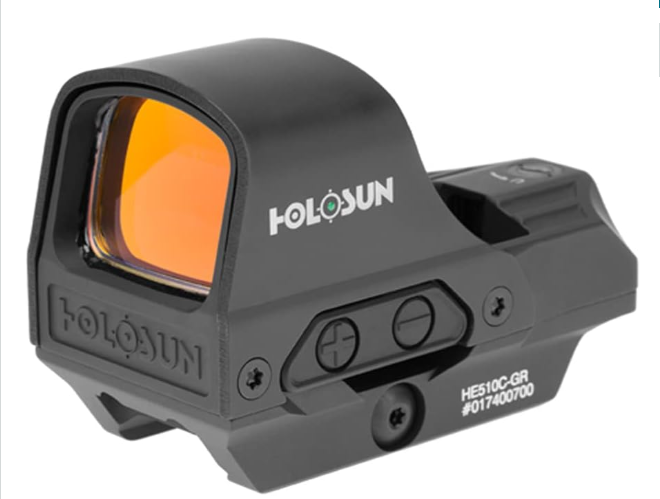 |
Holosun 510C | Large window, solar failsafe, three reticles, IP67 | Check Price |
| 2 | 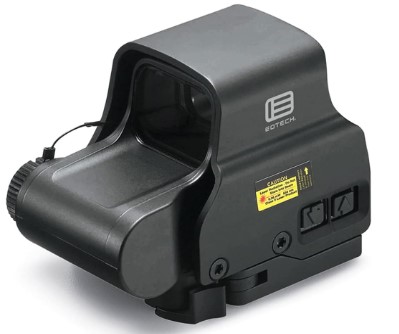 |
EOTech EXPS2 | Holographic parallax resistance, 1 MOA plus 68 MOA ring | Check Price |
| 3 | 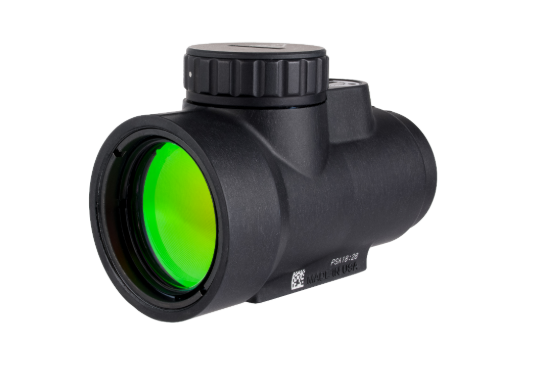 |
Trijicon MRO | 68 MOA housing, 5-year battery, military grade construction | Check Price |
| 4 | 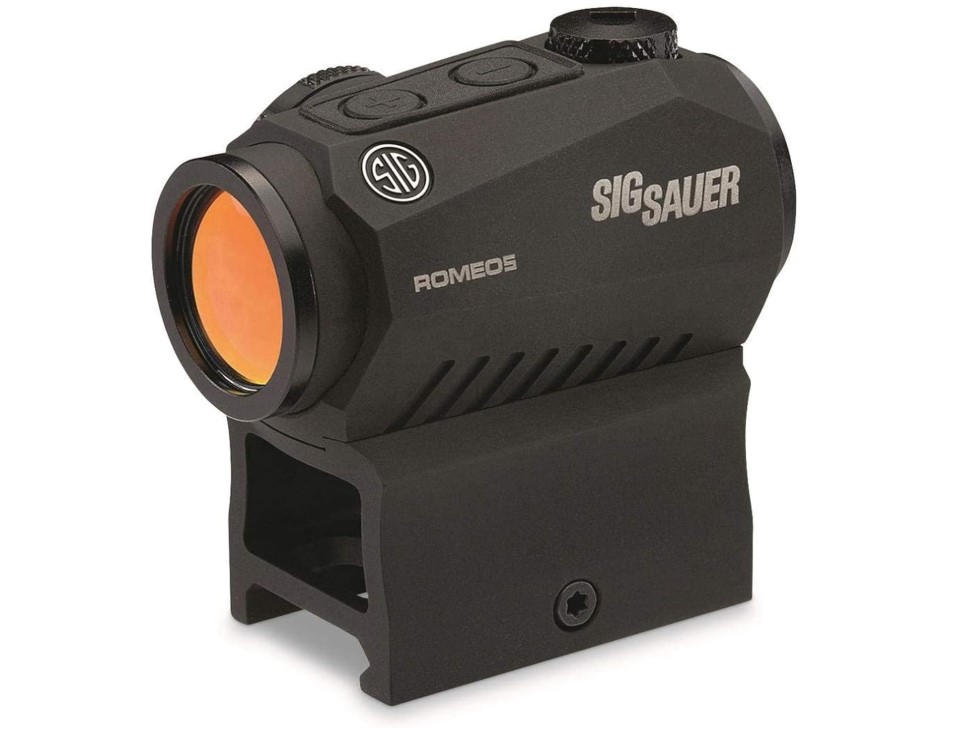 |
Sig Sauer Romeo5 | MOTAC shake awake, 2 MOA dot, lifetime warranty | Check Price |
| 5 | 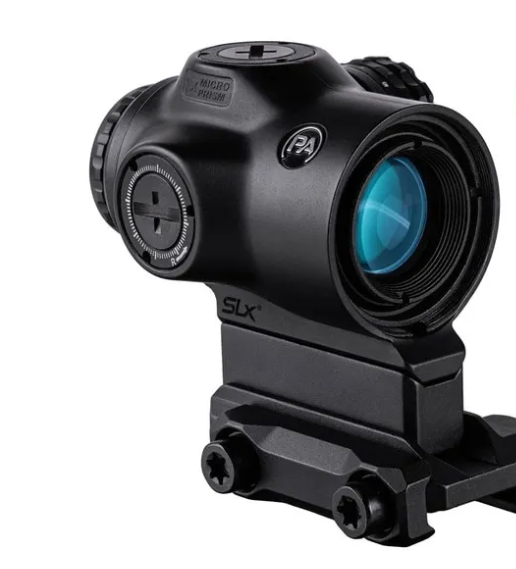 |
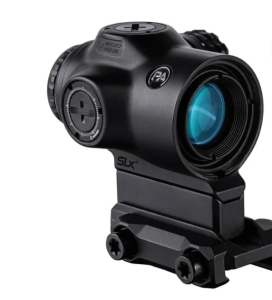
Primary Arms SLx Advanced Micro Prism 1x | ACSS Aurora reticle, etched glass, competition BDC | Check Price |
In Depth Reviews
The Stribog’s roller-delayed system gives every optic on this list a better platform to perform on than a simple blowback PCC. Here is what each pick adds to that mechanical advantage.
#1 Holosun 510C – Best Overall
The 510C is the natural starting point for the Stribog SP9A3, and the roller-delayed operating system makes the case for its large window more compelling than it would be on a simple blowback PCC. The argument runs like this: the roller-delayed mechanism reduces the distance the dot travels during recoil compared to simple blowback. A larger window keeps the dot visible through more of that reduced arc, which means the shooter has a longer confirmed-aiming window before the next shot needs to break at competition speed.
In USPSA PCC division, where split times between shots determine stage placements alongside accuracy, the combination of the SP9A3’s mechanical advantage and the 510C’s large window produces one of the fastest dot-return experiences available in a production PCC optic combination at this price.
The three reticle options on the 510C serve the SP9A3 across its applications. In PCC competition, the 2 MOA dot provides the precision for accurate shot calling on paper targets and steel at stage distances.
The solar failsafe is relevant for the SP9A3 used across both competition and home defense roles. A carbine that attends weekend matches, sits stored during the week, and is available for home defense in between benefits from the solar panel’s passive battery maintenance throughout that cycle. The battery is supplemented during outdoor match days and maintained during indoor storage in ambient light.
The MOTAC system activates the dot when the SP9A3 is moved. Battery life at setting 6 is 50,000 hours. The IP67 rating covers every outdoor competition and range environment the SP9A3 encounters.
Covered by Holosun’s 10-year warranty.
Key Features
| Feature | Specification |
|---|---|
| Window Size | 33 x 24 mm |
| Reticle Options | 2 MOA dot, 65 MOA ring, or combination |
| Power Source | CR2032 battery with solar backup |
| Battery Life | 50,000 hours at setting 6 |
| Water Resistance | IP67 |
| Warranty | Holosun 10-year warranty |
Pros
- Large window pairs with the SP9A3’s roller-delayed recoil to maximize the shooter’s confirmed-aiming window at competition speed
- Solar failsafe serves the dual competition-and-home-defense use pattern of the SP9A3 without battery monitoring
- Three reticle options cover PCC competition precision and defensive close-range acquisition in a single optic
- MOTAC activation means the dot is ready the moment the SP9A3 is raised to shoot
Cons
- The 510C’s larger housing is more than the minimum requirement for a casual range-only SP9A3 setup
- Standard version lacks night vision compatibility; NV variant costs more
- The roller-delayed system’s advantage diminishes if the optic mount is not torqued with threadlocker
Our Take
The Holosun 510C is the best single optic for the Stribog SP9A3 across its full range of competition, home defense, and range applications. The large window and roller-delayed recoil profile are a good match. Check current price and confirm the mount is secured before the first range session.
#2 EOTech EXPS2 – Best Holographic
The EOTech EXPS2 earns the holographic position on the Stribog SP9A3 for a reason that the roller-delayed operating system makes more significant than it would be on a simple blowback PCC. The SP9A3’s controlled recoil impulse produces a shot cycle where the dot travels a shorter distance and returns faster than on a simple blowback carbine. At competition speed, the shooter is managing the optic through a more controlled arc the window size advantage is offset by the dot traveling less. What remains as a differentiator at that speed is the parallax resistance of a holographic sight.
A standard red dot at close competition distances, 5 to 25 yards, produces a small but real parallax error when the shooter’s eye is not at the centre. The EXPS2’s holographic reticle projection eliminates that error at these distances, ensuring the shooter places every shot where the reticle indicates, regardless of minor head position variations between the draw and the shot break.
For an SP9A3 used in home defense where non-standard shooting positions are realistic and the shooting stance may not be perfect, the parallax forgiveness of the holographic design provides a specific reliability advantage. Combined with the roller-delayed system’s controlled recoil for faster follow-up shots in a defensive engagement, the EXPS2 makes the SP9A3 a more capable defensive carbine.
The 1 MOA dot plus 68 MOA ring reticle covers close defensive use with the ring and provides the precision for accurate fire at the ranges where the SP9A3’s controlled recoil gives it an accuracy advantage over simple blowback PCCs.
The quick-detach mount integrated into the EXPS2 base allows the optic to be removed and reinstalled while maintaining zero, a feature with practical value on a competition carbine where range bag organization matters.
Covered by EOTech’s two-year warranty.
Key Features
| Feature | Specification |
|---|---|
| Window Size | 30 x 23 mm |
| Reticle | 1 MOA dot with 68 MOA ring |
| Battery | AA, 600 hours at setting 12 |
| Brightness Settings | 20 (4 NV compatible) |
| Weight | ~11.2 oz |
| Warranty | EOTech 2-year warranty |
Pros
- Holographic parallax resistance complements the SP9A3’s roller-delayed precision at competition distances
- 1 MOA center dot exploits the SP9A3’s accuracy advantage at the close to moderate ranges where controlled recoil matters
- Quick-detach mount is useful for competition carbine range bag management
- 20 brightness settings provide the widest illumination range on this list
Cons
- 600-hour battery life requires scheduled AA replacement regardless of the SP9A3’s use pattern
- Two-year warranty is shorter than every other option on this list
- Heaviest optic on this list; adds meaningful mass to the SP9A3’s already substantial competition configuration
Our Take
The EOTech EXPS2 is the right pick for the Stribog SP9A3 owner who wants holographic parallax resistance for competition use and home defense. The combination of the SP9A3’s roller-delayed precision and the EXPS2’s holographic accuracy creates a specific performance advantage at competition distances. Manage the AA battery on a replacement schedule.
#3 Trijicon MRO – Best Premium
The Trijicon MRO earns the premium position on the Stribog SP9A3 through the combination of glass quality, battery longevity, and the open sight picture that the 68 MOA housing creates, qualities that suit both the competition and home defense roles this carbine fills.
The roller-delayed SP9A3 has a specific appeal among competition shooters who have compared it back to back with simple blowback PCCs: the shot-to-shot consistency is higher because the bolt’s controlled cycling produces more uniform behavior per trigger press. The MRO’s construction standard complements that mechanical consistency with an optic whose electronics and coatings are put to a standard that matches the platform’s own quality investment.
The 68 MOA housing aperture creates the wide, aware sight picture that is valuable on any carbine used in PCC competition or home defense. The shooter’s awareness of the target environment beyond the immediate aiming point is preserved by the open sight picture, which matters at competition stages where non-target engagements (no-shoots) are present alongside scoring targets.
The five-year battery life at setting 4 removes battery management from the SP9A3 owner’s consideration during a competition season. A PCC competitor who fires 500 rounds per month at matches and training events across a full season will not exhaust the MRO’s battery before the season ends.
The compact form factor of the MRO keeps the SP9A3’s already competition-ready profile clean without adding unnecessary visual or physical bulk.
Covered by Trijicon’s limited lifetime warranty.
Key Features
| Feature | Specification |
|---|---|
| Aperture | 68 MOA apparent field of view |
| Dot Size | 2 MOA |
| Battery | CR2032, 5 years at setting 4 |
| Brightness Settings | 7 (2 NV compatible) |
| Weight | 4.1 oz with low mount |
| Warranty | Trijicon limited lifetime warranty |
Pros
- Five-year battery life removes battery management from an entire competition season without replacement
- 68 MOA housing creates an open, aware sight picture that complements competition and defensive awareness
- Compact form factor suits the SP9A3’s competition-ready profile without adding bulk
- Construction standard appropriate for a platform used at sustained competition volumes
Cons
- No solar backup; the five-year battery is the alternative approach to passive maintenance
- Smaller window than the 510C; visible difference at fast split speeds in direct comparison
- Premium price is the highest on this list
Our Take
The Trijicon MRO is the right premium pick for the Stribog SP9A3 owner who wants the most refined compact red dot available for a competition and home defense carbine. The five-year battery life, open sight picture, and construction quality make it the investment for an owner who takes the SP9A3’s performance.
#4 Sig Sauer Romeo5 – Best Value
The Sig Romeo5 is the straightforward value answer for the Stribog SP9A3, the optic that covers every realistic use case at a price that does not require justification against the platform’s own cost.
The SP9A3 occupies a price point that attracts buyers who want the roller-delayed operating system’s performance without the premium of European military-contract alternatives. The Romeo5 matches that value-conscious approach with a proven, lifetime-warranted red dot at a price that keeps the total platform investment proportional.
MOTAC activation on the Romeo5 is the most relevant feature for the SP9A3 in home defense use. A carbine retrieved from storage, a vehicle, a safe, a closet rack, needs the dot active the moment it is raising to shoot. MOTAC delivers that without any manual power management step. The 40,000-plus hour battery life ensures the CR2032 is not the variable that introduces uncertainty into that first shot.
The 2 MOA dot is adequate for USPSA PCC competition at all realistic stage distances and for home defense use at any engagement distance the SP9A3 would see. The 10 brightness settings including 2 night vision compatible positions cover indoor competition stages and outdoor match conditions.
The Romeo5 mounts to the SP9A3’s Picatinny rail with the included mount. Apply threadlocker before the first range session and confirm zero through the initial use cycle.
Sig backs the Romeo5 with their Infinite Guarantee, lifetime coverage with no conditions.
Key Features
| Feature | Specification |
|---|---|
| Dot Size | 2 MOA |
| Battery | CR2032, 40,000+ hours |
| Brightness Settings | 10 (2 NV compatible) |
| Water Resistance | IPX7 |
| Weight | ~1.02 oz without mount |
| Warranty | Sig Sauer Infinite Guarantee (lifetime) |
Pros
- MOTAC activation is the correct feature for a stored home defense SP9A3 that needs immediate readiness
- Lifetime warranty from Sig matches the coverage standard of more expensive options at this price
- 40,000-hour battery life makes battery management optional for competition and home defense use patterns
- Lightweight adds minimal mass to the SP9A3’s already competition-friendly handling
Cons
- No solar backup; MOTAC sleep mode and long battery life are the alternative to passive solar charging
- Smaller window than the 510C; visible at competition split speeds in direct comparison
- The roller-delayed SP9A3’s mechanical advantage is not exploited by the Romeo5’s smaller window the way the 510C’s larger window is
Our Take
The Sig Sauer Romeo5 is the right value pick for the Stribog SP9A3 owner who wants MOTAC activation, lifetime warranty coverage, and proven reliability at a price that keeps the platform’s value proposition intact. It covers competition, home defense, and range use on the SP9A3 without compromise at this price point.
#5 Primary Arms SLx Advanced Micro Prism 1x – Best for Competition
The Primary Arms SLx Advanced Micro Prism earns the competition-specific position on the Stribog SP9A3 through the ACSS Aurora reticle’s competition utility on a PCC that has the mechanical quality to use that utility.
The SP9A3’s roller-delayed system produces more accurate shot-to-shot consistency than a simple blowback PCC. That consistency means the rifle delivers on the ACSS Aurora’s BDC holdover references more than a platform with more variable recoil behavior. When the reticle says a holdover point corresponds to a specific distance, the roller-delayed system’s controlled cycling makes that prediction more reliable per shot.
In USPSA PCC competition, stages present targets at distances beyond 25 yards that require an accurate aiming reference rather than a guess. The ACSS Aurora’s horseshoe ring handles close-target transitions at typical 7 to 25-yard stage distances, and the center dot plus BDC marks provide exact references for any longer shots on a stage that extends beyond that range. The full-featured reticle in a single optic eliminates the decision between acquisition speed and precision at any stage distance.
The etched reticle remains visible without battery power. For a competition carbine at a multi-day match where battery management is one more variable to manage, the certainty of a functional reticle regardless of battery status reduces operational overhead.
The prism design addresses astigmatism for SP9A3 owners who have experienced blurry or distorted dots on standard red dots. The etched glass reticle appears sharp regardless of astigmatism, which is a specific functional advantage that makes the prism optic the correct technical choice for a significant portion of the shooting population.
At 9.7 ounces, the Micro Prism is the heaviest optic on this list. For a competition PCC where optic weight is a consideration in overall system handling, this is worth acknowledging before committing.
Backed by Primary Arms’ lifetime warranty.
Key Features
| Feature | Specification |
|---|---|
| Magnification | Fixed 1x |
| Reticle | ACSS Aurora (illuminated and etched) |
| Eye Relief | Unlimited |
| Battery | CR2032 |
| Weight | ~9.7 oz |
| Warranty | Primary Arms lifetime warranty |
Pros
- ACSS Aurora BDC holdovers are exploited more on the SP9A3’s consistent roller-delayed platform than on variable simple blowback PCCs
- The ring-and-dot combination covers both close-target competition transitions and precision shots at extended stage distances
- Etched reticle reduces competition battery management overhead with a functional aiming reference regardless of power status
- Prism construction solves the astigmatism problem that prevents many shooters from using conventional red dots
Cons
- Heaviest optic on this list; worth considering against the SP9A3’s competition handling characteristics
- Fixed 1x with no magnification option
- Tighter eye box than open reflex sights; requires consistent head positioning in competition
Our Take
The Primary Arms SLx Advanced Micro Prism is the competition-specific pick for the Stribog SP9A3 owner who wants the ACSS Aurora reticle’s full capability on a PCC whose mechanical consistency makes BDC references reliable. The roller-delayed platform earns the ACSS Aurora’s potential in a way that simpler PCCs cannot deliver.
Did You Know? The roller-delayed blowback operating system in the Stribog SP9A3 descends from the HK MP5’s design, which was developed in West Germany in the 1960s and became the dominant law enforcement submachine gun of the Cold War era. The roller locking principle traces even further back to the World War II-era German StG 45 assault rifle. What the SP9A3 brings to civilian competition shooting is a mechanism that was refined across decades of operational use in law enforcement and special operations, applied to a 9mm PCC at a price point that makes the mechanical advantage accessible to recreational competitors rather than reserved for government-contract weapons.
Conclusion
The Stribog SP9A3 is a distinctive PCC in a market where most competitors use simple blowback. The roller-delayed operating system’s controlled recoil impulse is a genuine performance advantage that shows up in dot-return consistency, shot-to-shot accuracy, and the feel of the carbine under rapid fire. Every optic on this list benefits from that platform advantage.
For most SP9A3 owners across competition and home defense, the Holosun 510C is the right starting point. The large window complements the roller-delayed system’s shorter recoil arc by maximizing the confirmed-aiming window at competition speed. The solar failsafe, three reticle options, and proven construction make it the most complete answer for the SP9A3’s range of applications.
The EOTech EXPS2 adds holographic parallax resistance for the competition shooter who wants to eliminate that error source at the close distances where the SP9A3’s controlled recoil already provides a timing advantage. Manage the battery schedule and it is a strong competition choice.
The Trijicon MRO is for the owner who wants the most refined compact red dot available for a platform they are investing in, the five-year battery life, open sight picture, and construction standard match the SP9A3’s own quality level.
The Sig Romeo5 provides the value case: MOTAC activation, lifetime warranty, and proven performance at a price that respects the SP9A3’s own value-conscious market position.
The Primary Arms SLx Micro Prism is the competition specialist, the ACSS Aurora reticle’s BDC capability is more delivered on the SP9A3’s consistent roller-delayed platform than on any simple blowback PCC, and the etched reticle plus astigmatism compatibility make it the right technical choice for the right shooter.
The roller-delayed mechanism is the SP9A3’s defining characteristic. Choose the optic that is worthy of it.